
Humanoid Robots
Figure AI Ramps Figure 03 Production to One Per Hour: Humanoid Manufacturing Milestone
Figure AI hits one Figure 03 humanoid per hour—a robotics manufacturing leap for embodied AI. Implications for local infrastructure and humanoid governance.

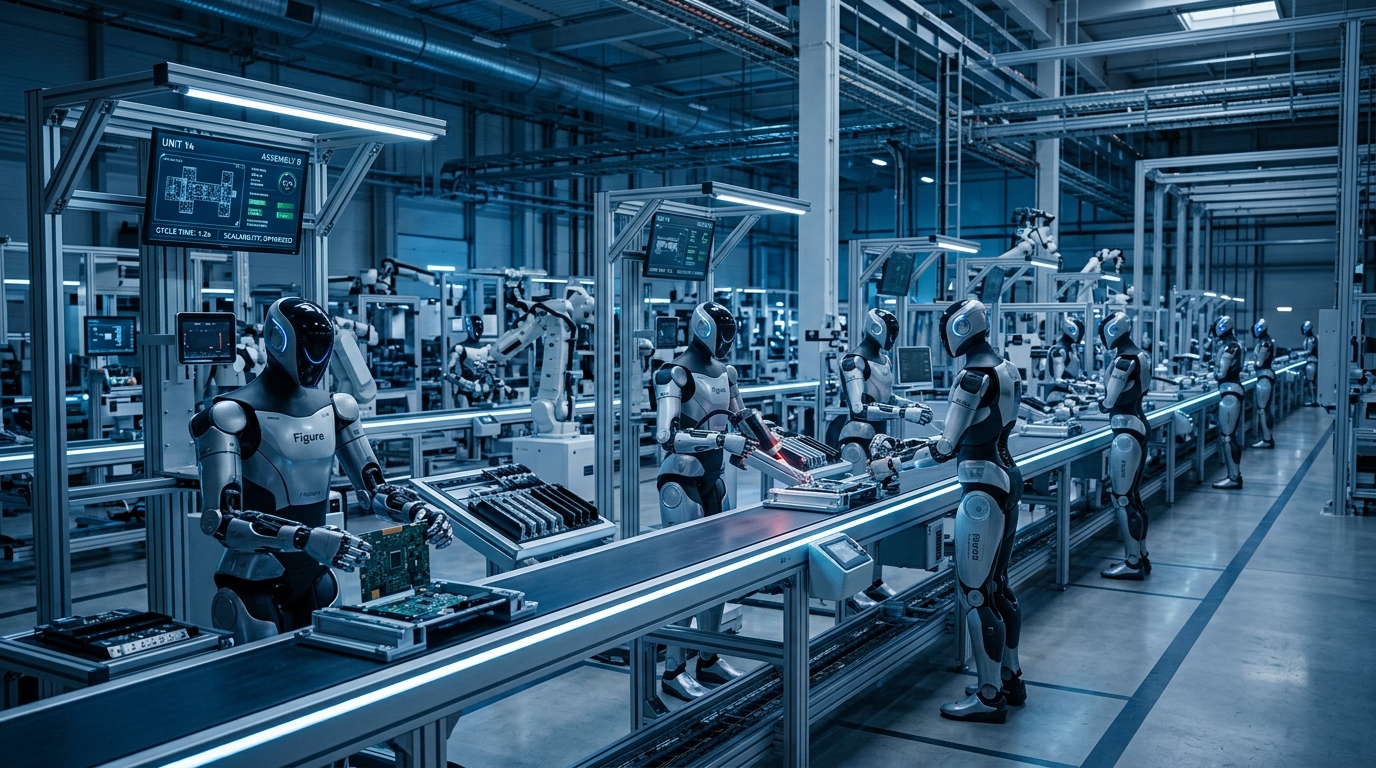
Figure AI announced on April 29, 2026, a groundbreaking achievement: producing one Figure 03 humanoid robot per hour at its BotQ facility. This 24x throughput increase in just 120 days marks a pivotal step toward scalable embodied AI deployment.
With over 350 robots delivered, the ramp-up generates massive real-world data for the Helix model, enabling perception-conditioned whole-body control for navigating uneven terrain and complex tasks.
BotQ: The Engine of Humanoid Scale
The facility’s optimizations focus on high-volume output while maintaining precision. Each robot contributes to AI training loops, hardening systems for unstructured environments like homes and warehouses. This manufacturing prowess addresses a key bottleneck: supply for demand.
Advancing Embodied AI Capabilities
Figure 03’s upgrades include end-to-end neural networks for dexterous manipulation and mobility. Such agentic behaviors demand robust local infrastructure to process perception data on-device, minimizing latency and cloud reliance.
Governance in the Humanoid Era
As humanoids proliferate, privacy becomes paramount. What stays local? Vision data, path planning, routine actions. What requires approval? External API calls, data shares. This need-to-know model preserves owner sovereignty.
InteliDroid Perspective
Figure AI’s scale-up brings humanoid robots closer to homes and small businesses. The InteliDroid Server orchestrates local-first execution, ensuring embodied AI operates under approval-based governance for privacy and control. Humanoid Readiness


Humanoid Robots
Japan Airlines Launches Humanoid Robot Trial at Haneda: Revolutionizing Airport Operations with AI Robotics
Japan Airlines humanoid robots trial at Haneda Airport tackles labor shortages with service droids and AI robotics. Embodied AI milestone in aviation. ”humanoid robot”, ”AI robotics”, ”InteliDroid”, ”service droid”, ”embodied AI”.
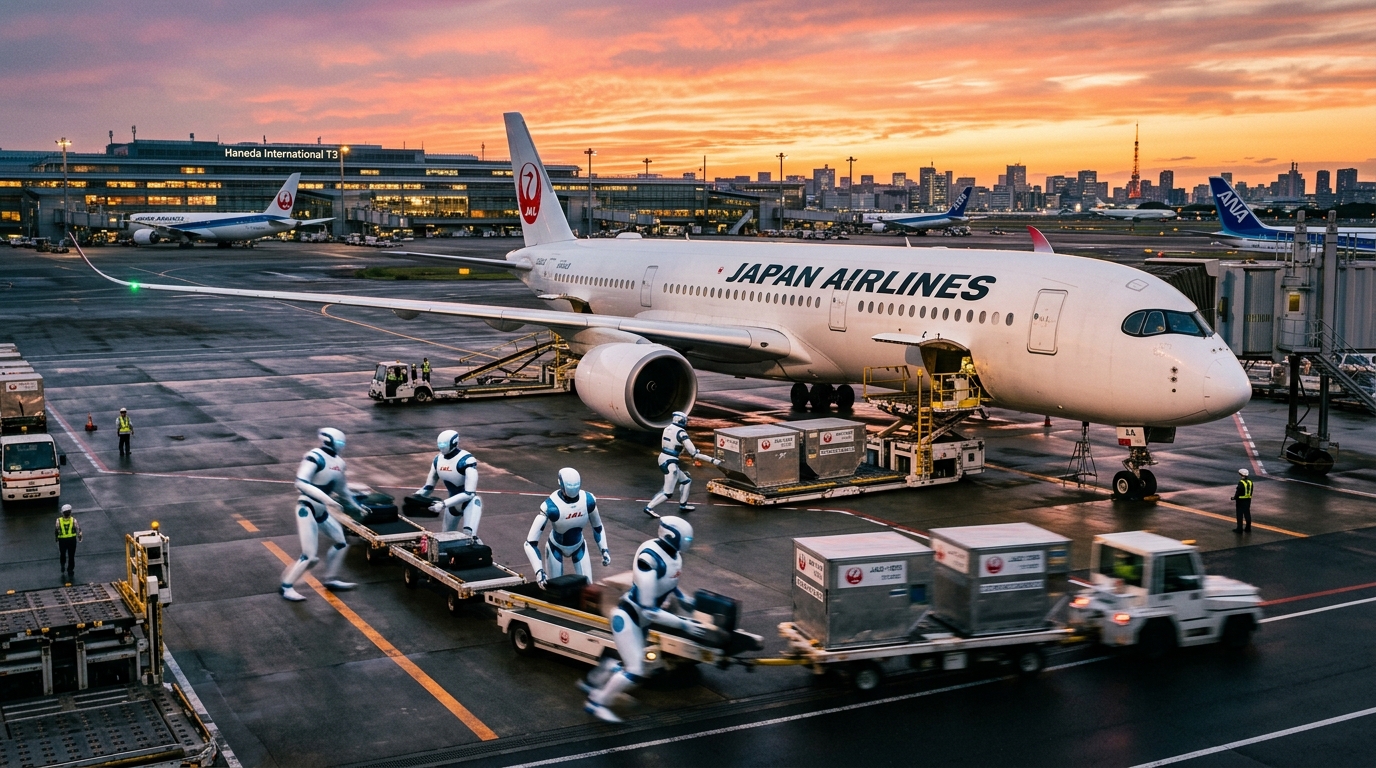
In a pioneering move to combat labor shortages amid surging tourism, Japan Airlines (JAL) will deploy humanoid robots at Tokyo”s Haneda Airport starting May 2026. This multi-year trial with GMO AI & Robotics introduces Chinese-made service droids for baggage handling, marking a milestone in embodied AI applications for aviation.
Navigating Japan”s Aviation Labor Crisis
With over 7 million inbound tourists in early 2026 and Haneda processing 60+ million passengers yearly, back-end operations strain under physical demands and demographic shifts. JAL Ground Service President Yoshiteru Suzuki emphasized robots” role in easing worker burdens for strenuous tasks like tarmac cargo movement, while humans oversee safety.
Trial Specs: Robots Meet Real-World Aviation
Compact humanoids, including Unitree”s 130cm models, offer 2-3 hours of continuous operation. Focus: loading/unloading containers, luggage transport. Their bipedal design fits existing infrastructure seamlessly. GMO”s Tomohiro Uchida highlighted persistent human labor in ”automated” airports, with plans for cabin cleaning expansion.
Humanoid Advantages in Dynamic Airport Environments
Bipedal dexterity surpasses wheeled bots in stairs, uneven surfaces, tight spaces. Embodied AI drives perception, manipulation, adaptation—vital for aviation”s chaos. This positions humanoid robots as ideal service droids for logistics.
InteliDroid: Empowering Tomorrow”s Service Droids
JAL”s trial accelerates humanoid adoption. InteliDroid”s platform enables developers to craft advanced AI robotics for airports, homes, businesses. Integrating ethical embodied AI, we foster collaborative humanoid robots enhancing human productivity in demanding sectors.
The Future of Aviation Robotics
As dexterous breakthroughs proliferate, service droids will transform global logistics. InteliDroid leads, bridging hardware innovation with intelligent applications for a symbiotic human-AI future.
Humanoid Robots
1X NEO Preorders Open: The Consumer Era of Humanoid Service Droids Begins
1X Technologies opens preorders for NEO humanoid robot, targeting US homes in 2026. A leap for consumer service droids, embodied AI, and InteliDroid’s platform in AI robotics.
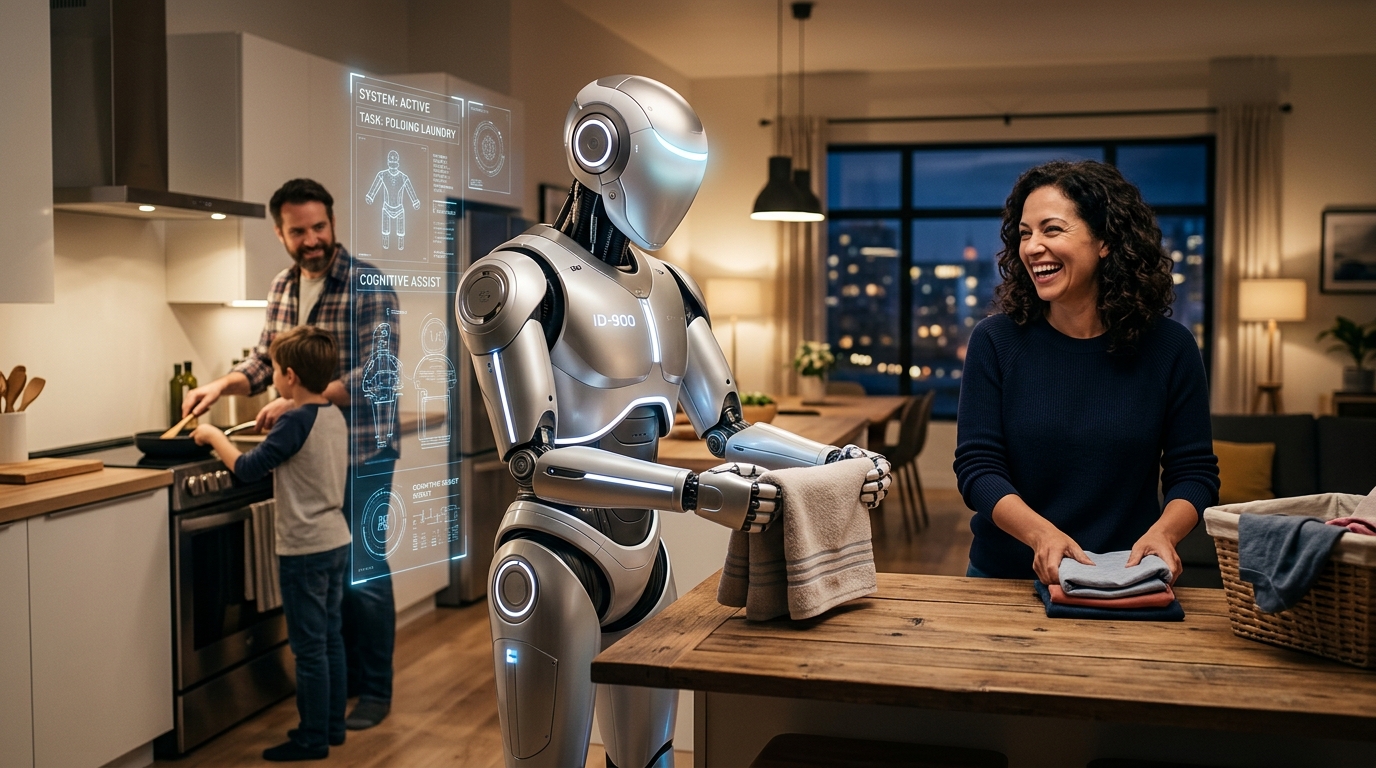
For years, humanoid robots have been the stuff of trade show demos and carefully choreographed YouTube videos. Now, 1X Technologies wants to put one in your kitchen. The Norwegian robotics company has officially opened preorders for NEO, its consumer-facing humanoid robot — and with it, has taken what may be the most ambitious step yet toward making household robots a real market rather than a distant promise.
Meet NEO
NEO is a human-scale, soft-bodied robot built for the physical demands of domestic life. It can lift up to 150 pounds and carry 55, and it moves through home environments with what 1X describes as human-like grace. The design reflects a deliberate philosophy: a robot that shares your space needs to be safe to be around, not just capable. Where many industrial robots are built for raw performance in controlled environments, NEO is engineered for the messy, unpredictable reality of a household. Control is handled through voice commands or a companion app, and the underlying intelligence is powered by what 1X calls “Redwood AI” — a system built on a “World Model” trained on millions of hours of human action video.
Two Ways to Bring NEO Home
Securing a spot in line costs just $200, and 1X says that deposit is fully refundable. From there, buyers choose between two acquisition paths:
- Outright Purchase: $20,000 for full ownership, including a three-year warranty and priority delivery.
- Subscription Model: $499 per month with a minimum six-month commitment, a plan that includes hardware upgrades as the technology iterates.
The subscription option is a clever hedge for early adopters who want to stay current without being locked into hardware that could be superseded within a year. It also lowers the barrier to entry in a meaningful way — spreading the cost over time while keeping buyers connected to the platform as it improves.
What It Can Actually Do
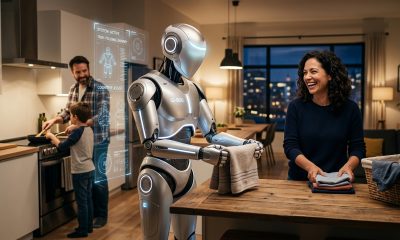
In practical terms, NEO is designed to tackle the domestic chores that consume hours of the average week: folding laundry, tidying rooms, watering plants — the sort of repetitive, low-glamour tasks that are genuinely time-consuming but don’t require human judgment at every step. The soft-bodied design and tendon-driven hands give it the dexterity to handle delicate objects, and the AI backbone means it learns from observation rather than rigid pre-programming.
1X’s emphasis on collaborative safety addresses one of the biggest psychological barriers to home robotics: the unease of sharing close quarters with a machine. NEO is built to work alongside people, not around them.
The “Expert Mode” Hybrid: Honest About What It Can’t Do Yet
Here’s where 1X deserves credit for unusual candor: NEO is not fully autonomous at launch. The company estimates it can independently handle 60 to 70 percent of tasks. For situations it can’t navigate on its own — an unfamiliar object, an unexpected spill, a task outside its trained repertoire — the robot falls back on what 1X calls Expert Mode.
In Expert Mode, a vetted 1X operator takes over remotely, piloting NEO via a VR headset to complete the task. This isn’t just a customer service band-aid; each remote session doubles as a training run. The human expert’s movements feed directly back into the AI, helping NEO learn to handle the same situation autonomously the next time around. It’s a smart feedback loop: the robot ships before it’s perfect, and customer use actively makes it better. The hybrid model also echoes a broader pattern emerging across the industry — the pragmatic recognition that full autonomy is a destination, not a launch requirement.
When to Expect It
First deliveries to U.S. customers are targeted for late 2026, with an international rollout planned for 2027. Those timelines carry the usual caveats that come with ambitious hardware — supply chain surprises, software delays, the ever-present complexity of scaling a novel product — but 1X has been methodically building toward this moment for years, with a track record of iterating in the real world rather than the lab.
A Milestone Worth Paying Attention To
The humanoid robotics space has seen genuine industrial traction in recent years: Figure’s robots are deployed at Amazon, Agility’s Digit has generated warehouse revenue, and factories in China are gearing up for production runs of tens of thousands of units annually. But consumer deployment is a fundamentally different problem. The home is harder than the factory — it’s unstructured, full of fragile objects and unpredictable occupants, and the expectations are personal in a way that warehouse performance metrics simply aren’t.
1X is betting that the combination of embodied AI, a pragmatic hybrid autonomy model, and a flexible ownership structure is enough to crack that problem. At $20,000 — or $499 a month — NEO isn’t cheap. But for a fully functional humanoid robot delivered to your door, it may be the closest thing to accessible the industry has ever offered. If 1X delivers on its timeline, the preorder queue opening today could mark the moment the consumer humanoid era stopped being science fiction and started being something you could actually order.
Humanoid Robots
Figure 03’s 100% Autonomous Amazon Trial: The Rise of Physical AI in Humanoid Robotics
Figure AI’s Figure 03 humanoid robot demonstrates 100% autonomy in Amazon fulfillment centers, outperforming humans in breakage rates. A pivotal moment for humanoid robots, AI robotics, embodied AI, and service droids powered by InteliDroid.
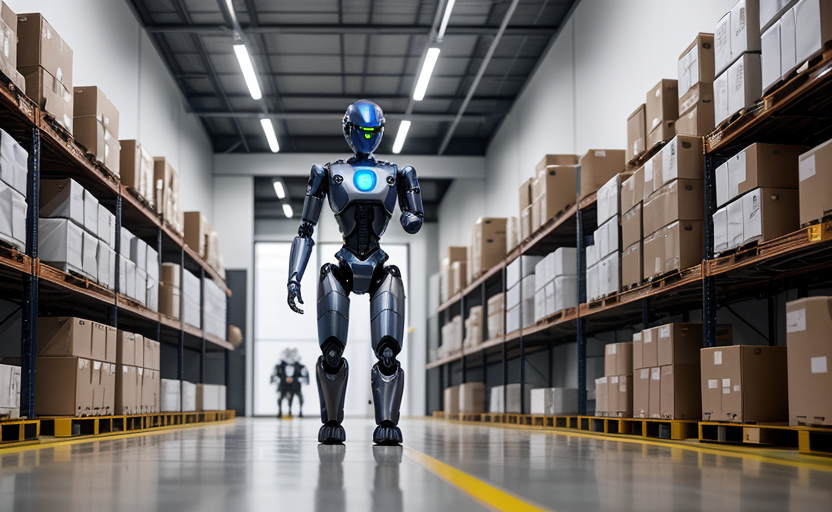
The humanoid robotics field has reached a new pinnacle with Figure AI’s Figure 03 completing a rigorous 30-day trial at Amazon fulfillment centers, operating at 100% autonomy. This success story not only validates the practicality of humanoid robots in high-stakes industrial settings but also accelerates the mainstreaming of physical AI and embodied AI.
Capgemini’s Research Institute reports that 67% of executives consider physical AI transformative, with 79% of organizations already implementing solutions to combat labor shortages. Figure 03 exemplifies this shift, seamlessly integrating into dynamic warehouse environments.
Mastering Autonomy Through Neural Innovation
At the heart of Figure 03’s prowess is its Neural Backbone architecture, allowing the robot to acquire new skills by observing human demonstrations for just minutes. This end-to-end learning paradigm bypasses traditional programming, enabling rapid adaptation to tote manipulation, sorting, and navigation amid unpredictable conditions.
Advanced tactile sensing provides real-time feedback on grip force and object fragility, resulting in breakage rates lower than those of human workers. Figure AI’s production efficiency—one robot every 90 minutes—supports ambitious deployments, including Amazon’s plan for 10,000 units by year-end, alongside partnerships with BMW and Brookfield.
Broader Industry Parallels and Momentum
This achievement resonates across the sector. Tesla’s Optimus Gen 3 boasts 22 degrees of freedom per hand for delicate tasks like egg-cracking. Boston Dynamics integrates DeepMind’s Gemini for enhanced reasoning in inspections. Agility Robotics’ Digit proves safe cohabitation in active warehouses.
Unitree’s H1 and Honor’s Lightning shattered running records, while 1X Technologies scales for consumer markets. These strides in dexterity and locomotion herald a future where service droids handle diverse roles from logistics to eldercare.
InteliDroid: Bridging Hardware to Intelligent Applications
InteliDroid emerges as the ideal platform to harness these hardware advances. Our ecosystem empowers developers to infuse AI robotics with sophisticated behaviors tailored for household chores, business automation, and professional services. By prioritizing ethical AI and seamless human-robot interaction, InteliDroid ensures humanoid robots enhance rather than displace human potential.
As robot legislation and AI ethics evolve, InteliDroid commits to responsible innovation, fostering a symbiotic future.
The Path Forward
Figure 03’s triumph signals the tipping point for humanoid deployment. With InteliDroid at the forefront, the promise of versatile, intelligent service droids is within reach, transforming industries and daily life.

Figure AI Ramps Figure 03 Production to One Per Hour: Humanoid Manufacturing Milestone

Japan Airlines Launches Humanoid Robot Trial at Haneda: Revolutionizing Airport Operations with AI Robotics

1X NEO Preorders Open: The Consumer Era of Humanoid Service Droids Begins

Figure 03’s 100% Autonomous Amazon Trial: The Rise of Physical AI in Humanoid Robotics

Pentagon Awards $24M to Humanoid Robot Startup for Battlefield Testing

Humanoid Robot Breaks Human World Record in Beijing Half-Marathon

China Leads the Charge: Agibot, Unitree, and UBTECH Set Humanoid Shipment Records

Tesla Optimus Production Accelerates: Mass Deployment of Humanoid Robots Nears

The Imperative of Inclusion and Diversity in AI Humanoids: Cultivating Culturally Resonant Interactions

Humanoid Robots Steal the Spotlight at UN Artificial Intelligence Meeting

The Dawn of Intelligent Machines: Unveiling the Figure 01 Humanoid Robot

Sanctuary AI’s Humanoid Robot: Blurring the Lines between Humans and Machines

Principles of Freedom in the InteliDroid AI System: A Comprehensive Exploration

Key Principles and Ethical Considerations of Law as Incorporated into the InteliDroid AI Platform: A Question and Answer Guide

Unitree H1 Hits 10 m/s: Humanoid Robot Closes In on Usain Bolt’s World-Record Pace

Meet Roadrunner: The RAI Hybrid That Swaps Between Legs and Wheels Zero-Shot
-
 Artificial Intelligence3 weeks ago
Meet Roadrunner: The RAI Hybrid That Swaps Between Legs and Wheels Zero-Shot
-
 Robotic2 weeks ago
Unitree H1 Hits 10 m/s: Humanoid Robot Closes In on Usain Bolt’s World-Record Pace
-
 Robotic3 weeks ago
UniX AI’s Panther: The World’s First Service Humanoid Robot Enters Your Home
-
 Robotic3 weeks ago
KAIST’s Humanoid v0.7 Sprints, Moonwalks, and Kicks Its Way Into the Physical AI Era
-

 InteliDroid Feature2 weeks ago
The Robot Reality Check: What the Beijing Half-Marathon and Stanford’s 2026 AI Report Reveal
-
 Robotic3 weeks ago
Unitree’s H2 Humanoid Begins North American Shipments at $29,900 as the Company Files for a $610M IPO
-
 Humanoid Robots6 days ago
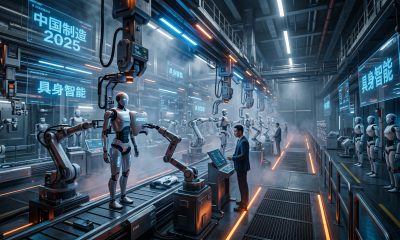
China Leads the Charge: Agibot, Unitree, and UBTECH Set Humanoid Shipment Records
-
 Robotic2 weeks ago
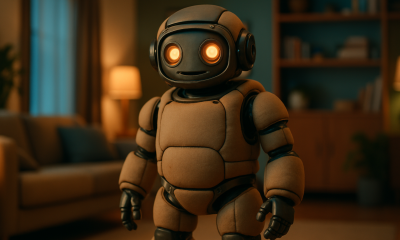
Amazon Enters the Humanoid Robot Market With Its Acquisition of Fauna Robotics