
Artificial Intelligence
Sanctuary AI’s Humanoid Robot: Blurring the Lines between Humans and Machines
Sanctuary AI’s new humanoid robot, standing at a human-like height of 5’7″ and capable of lifting 55 pounds, signifies a major step in the field of robotics. Equipped with advanced AI and sophisticated sensory systems, this robot can adapt to new situations, perform delicate tasks, and interact with humans in an impressively natural way. Its potential applications range from manufacturing to customer service, promising to revolutionize multiple industries.

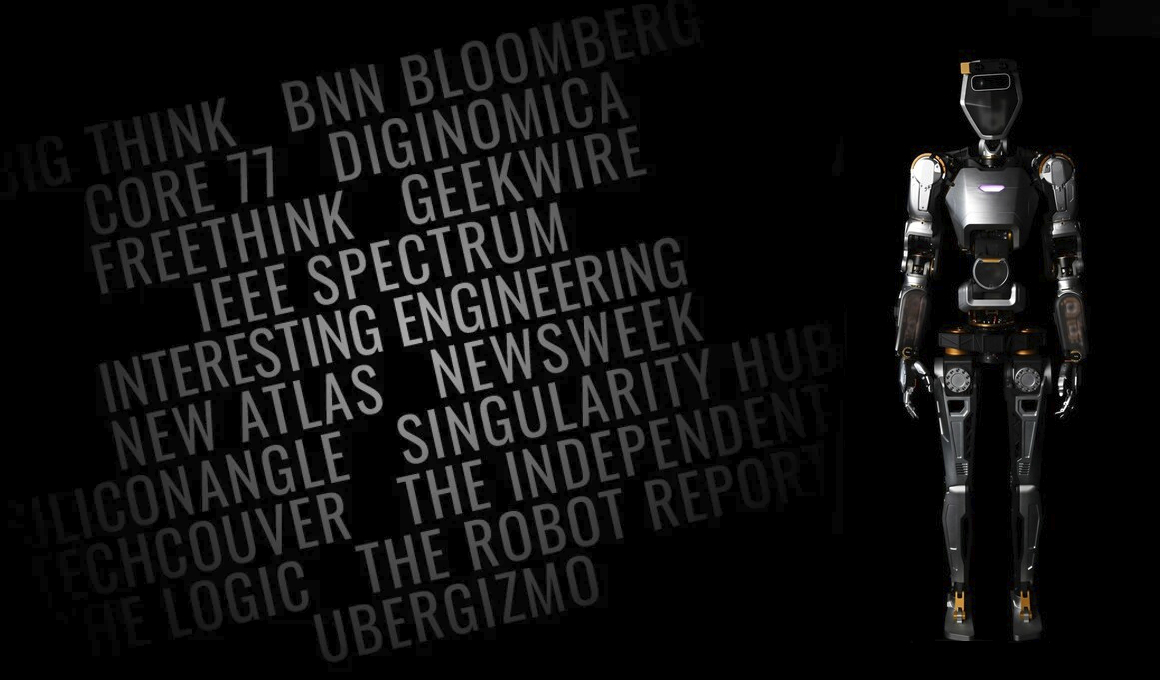
In the dynamic world of artificial intelligence and robotics, Sanctuary AI’s latest creation is breaking boundaries. Standing 5’7″ tall, with the capability of lifting 55 pounds, this new humanoid robot has capabilities that promise to reshape our future interactions with machines.
A Humanoid Like No Other
The humanoid robot from Sanctuary AI brings the future of science fiction to our present reality. One of the most striking features of the robot is its size and strength. With a height similar to the average human, the robot possesses the strength to lift 55 pounds. This perfect blend of power and size enables the robot to interact seamlessly with human environments and handle a wide range of physical tasks, an attribute that sets it apart from its predecessors.

Moreover, Sanctuary AI’s humanoid is designed to mimic human dexterity, capable of performing tasks requiring fine motor skills, such as picking up delicate objects or operating tools. It also has superior balance, enabling it to navigate through complex terrains and adjust its footing in real-time, just like a human.

Robust Intelligence
The physical attributes are impressive, but the robot’s true game-changing feature lies within its sophisticated AI system. It uses advanced Machine Learning (ML) algorithms, allowing it to learn from its environment, adapt to new situations, and improve its performance over time. Whether it’s learning a new task or improving efficiency in a familiar one, the robot can evolve and adapt in an impressively human-like manner.
Furthermore, Sanctuary AI’s humanoid robot incorporates state-of-the-art Natural Language Processing (NLP) technologies, which enable it to understand and respond to complex linguistic cues. This advanced communication feature allows for an incredibly human-like interaction, bridging the gap between humans and machines.
Sensory Perfection
This humanoid robot possesses a series of sophisticated sensors that allow it to perceive the world with striking accuracy. It uses advanced computer vision to identify and recognize objects, people, and environments. Its sensors can detect temperature, touch, and even interpret sounds, giving the robot a holistic perception of its surroundings.
Applications and Future Prospects
Sanctuary AI’s humanoid robot has potential applications in a plethora of fields. Its strength and dexterity could be utilized in industries such as manufacturing or logistics, while its sophisticated AI could revolutionize customer service or healthcare.
Its ability to handle a variety of physical tasks could see the robot applied in environments too dangerous for humans, like disaster response or hazardous material handling. Meanwhile, its advanced communication capabilities could transform the way businesses engage with customers, offering a high degree of personalization and efficiency.
Sanctuary AI’s new humanoid robot embodies the company’s commitment to creating machines that not only work with people but can also understand and adapt to human ways. This latest addition to the world of robotics is a giant leap towards a future where humanoid robots are commonplace, augmenting human capabilities and revolutionizing multiple sectors. Sanctuary AI has presented a vision of the future, a future where machines not only imitate human actions but can also understand and adapt to the human world in an incredibly nuanced manner.







Artificial Intelligence
Home Assistant 2026.5 Beta Unlocks RF Control for Local-First Smart Homes
Home Assistant 2026.5 beta adds RF control and dashboard enhancements, strengthening local smart home AI, agentic AI, and privacy governance for homes and businesses.
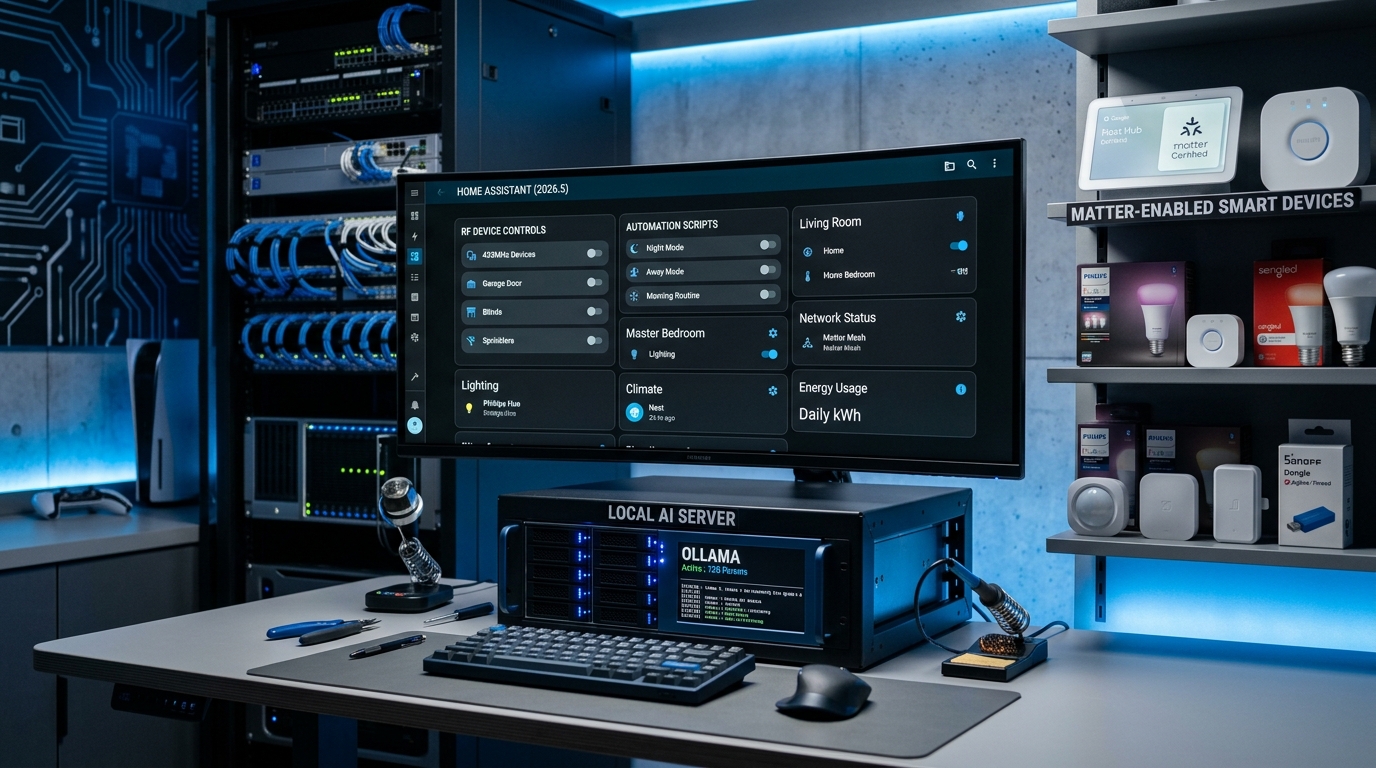
The open-source Home Assistant platform has unveiled its 2026.5 beta, released on April 30, 2026, marking a significant step forward in local smart home automation. Building on the infrared control introduced in 2026.4, this update adds native radio frequency (RF) support, enabling seamless integration of legacy devices like wireless switches, sensors, and actuators without relying on cloud services.
RF Integration: Bridging Old and New Hardware
RF control expands Home Assistant’s reach to devices operating on 433MHz and similar bands, common in older smart home setups. This local execution preserves privacy by keeping commands on-premises, crucial as agentic AI workflows grow more sophisticated. Homeowners and small businesses can now orchestrate complex automations—triggering lights, gates, or alarms—via local AI models like those in Ollama, ensuring low latency and full auditability.
This advancement addresses a key question: What should stay local? Routine device interactions, by design, remain within the node, escalating only sensitive decisions for owner approval.
Dashboard Overhauls and Assist Enhancements
New built-in dashboards feature customizable sections with color coding, refined cards, and real-time visualization of automation states. The Assist interface now exposes LLM “thinking steps,” demystifying AI decisions in voice or text commands. For smart home AI, these tools empower users to monitor and refine agentic behaviors directly.
Recent Matter developments, such as the Dreame Navo A10 smart lock certification, further solidify interoperability. Home Assistant’s updates position it as the backbone for Matter-enabled ecosystems, reducing vendor lock-in.
Toward Humanoid-Ready Smart Homes
As embodied AI nears homes—think robotic vacuums evolving into versatile assistants—these features prepare infrastructures for multi-modal control. RF and IR handling ensures humanoid agents can interface with diverse hardware, governed by need-to-know data sharing principles.
What role for local infrastructure? Platforms like Home Assistant, paired with private AI conductors, enable scalable, privacy-preserving orchestration.
InteliDroid Perspective
Home Assistant’s RF capabilities underscore the value of protocol-agnostic local automation. The InteliDroid Server leverages OpenClaw to unify such systems, enforcing approval-based execution across smart devices while prioritizing owner control and data sovereignty. Explore Smart Home Sovereignty.
Artificial Intelligence
Meet Roadrunner: The RAI Hybrid That Swaps Between Legs and Wheels Zero-Shot
The Robotics and AI Institute (RAI) has unveiled “Roadrunner,” a 15kg bipedal-wheeled prototype that uses a single AI policy to master multiple locomotion modes—from balancing on one wheel to high-speed in-line driving.
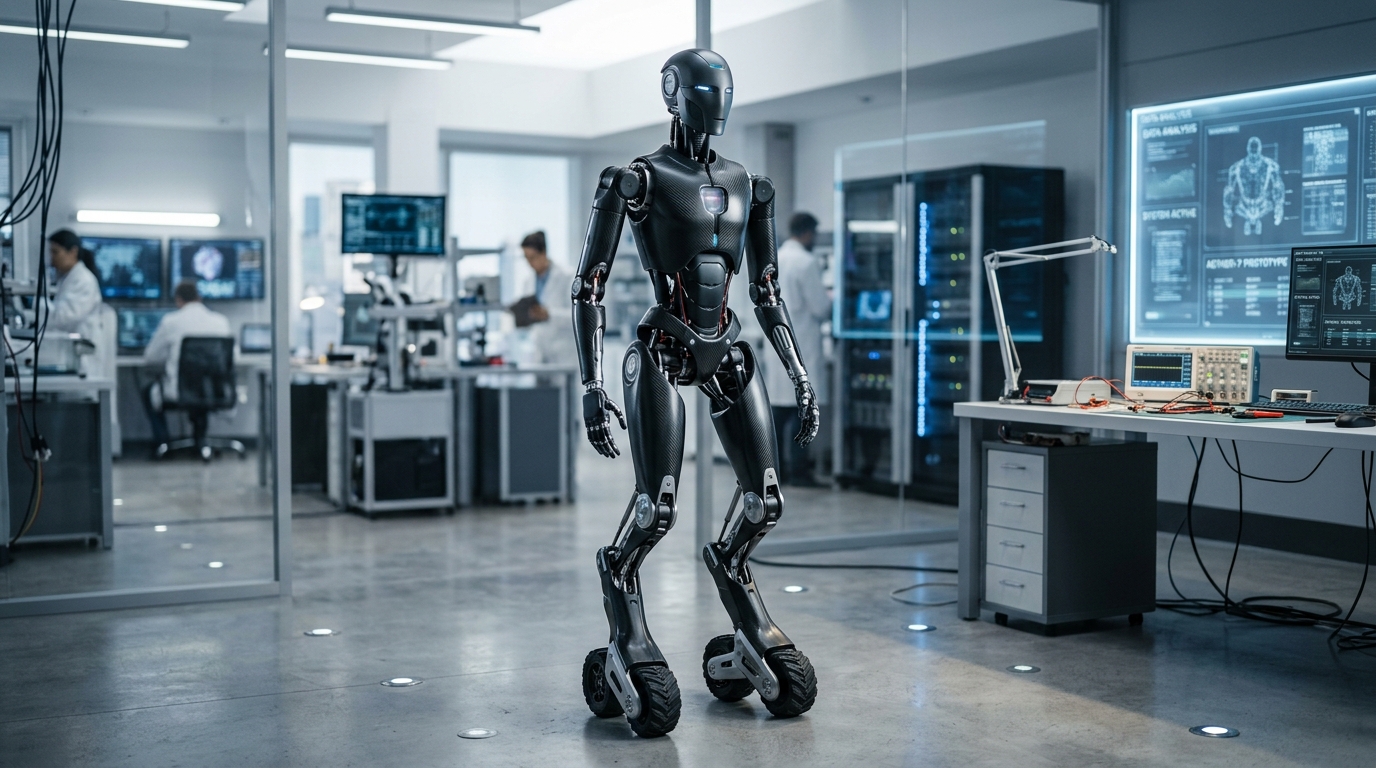
In the race to build the perfect humanoid, the industry has long been divided by a fundamental trade-off: wheels offer unmatched efficiency and speed on flat surfaces, while legs provide the versatility to conquer stairs and uneven terrain. But what if a robot didn’t have to choose? This week, the Robotics and AI Institute (RAI) offered a compelling answer with the reveal of “Roadrunner,” a 15kg (33 lb) bipedal-wheeled prototype that redefines what multimodal locomotion looks like in the Physical AI era.
Mechanical Symmetry: A Design for Any Direction
At first glance, Roadrunner looks like a minimalist bipedal frame. However, its engineering tells a deeper story of versatility. The robot’s legs are entirely symmetric, a design choice that allows its knees to point either forward or backward without affecting its gait or balance. This “non-preferential” orientation is more than a party trick; it allows Roadrunner to navigate extremely tight spaces and recover from complex falls that would leave traditional humanoids tangled in their own kinematics.
But the real magic is at the feet. Roadrunner is equipped with high-torque wheels that can transition between two distinct configurations: side-by-side (balancing like a Segway for high agility and turning) and in-line (aligning like a bicycle for maximum aerodynamic efficiency and stability at speed). The ability to swap between these modes on the fly allows the robot to adapt to its environment in real-time, choosing the most efficient path forward.
The Power of the Single Control Policy
Historically, multimodal robots have required multiple, hand-engineered controllers—one for walking, one for balancing, and one for driving. This created “mode-switch” lag and made them prone to crashing during transitions. RAI has bypassed this bottleneck by training a single neural network control policy that handles the entire spectrum of Roadrunner’s movement.
Using advanced reinforcement learning in simulation, the RAI team taught the robot to manage both wheel modes and stepping configurations simultaneously. The result is a seamless fluidity of motion. Whether it’s standing up from a collapsed ground state or balancing precariously on a single wheel, the robot’s “brain” treats every movement as a continuous optimization problem rather than a set of rigid instructions.
Zero-Shot: From Simulation to the Lab Floor
Perhaps the most significant technical milestone for Roadrunner is its zero-shot deployment. The control policy was trained entirely in a digital twin environment and then transferred directly to the physical hardware without any fine-tuning or manual adjustment. In the world of robotics, the “sim-to-real gap” is often a multi-month hurdle; for Roadrunner, the transition was instantaneous.
This capability suggests that as our simulation engines (like NVIDIA’s Isaac or Google’s MuJoCo) become more sophisticated in 2026, the speed of hardware iteration will explode. RAI’s success shows that complex, hybrid behaviors can be perfected in code before a single motor is ever turned on in the physical world.
Why Roadrunner Matters
While heavyweights like Tesla and Figure are focusing on general-purpose humanoids for the factory floor, Roadrunner represents a different branch of the evolutionary tree: the specialized, hyper-mobile scout. At 15kg, it is light enough to be deployed for inspection in hazardous environments, urban delivery, or as a high-speed research platform for multi-agent coordination.
As we move deeper into 2026, the definition of “humanoid” is expanding. It is no longer just about mimicking the human form—it is about leveraging the human-centric world using the most efficient tools available. By combining the agility of legs with the efficiency of wheels and the intelligence of a unified AI policy, Roadrunner is proving that in the future of robotics, the best way to walk is sometimes to roll.
Stay tuned to InteliDroid as we follow the RAI team’s next steps toward commercializing this platform.
Artificial Intelligence
The Imperative of Inclusion and Diversity in AI Humanoids: Cultivating Culturally Resonant Interactions
InteliDroid leads the way in fostering inclusion and diversity in AI humanoids, offering culturally resonant interactions on a physical, intellectual, and emotional level. With a vast range of language derivatives, diverse physical features, and emotionally intelligent responses, InteliDroids ensure effective communication and meaningful engagement with every user, reflecting the richness of our diverse societies.

The burgeoning landscape of artificial intelligence has fostered a revolutionary shift in how we perceive and interact with technology. AI humanoids, once a product of science fiction, have now become a tangible reality. Among the pioneers of this AI revolution is InteliDroid, a brand that prides itself on its commitment to fostering inclusion and diversity in its humanoid AI designs. This commitment echoes a universal truth: our societies are diverse and multicultural, and to serve them effectively, our technology needs to reflect that diversity.
Understanding Cultural Nuances: The Intellectual Level
At the core of InteliDroid’s diversity program is the understanding that each culture carries unique nuances and subtleties. The company’s AI humanoids are imbued with a vast range of language derivatives, designed to facilitate intellectual interactions that are both culturally familiar and relevant. These AI humanoids can converse in a multitude of languages, and they grasp the distinct idioms, phrases, and linguistic subtleties that embody a particular culture’s richness. By learning the user’s preferred language and its derivative nuances, InteliDroids ensure effective and intimate communication.
User Empowerment: Personalization and Learning in AI Humanoids
In the realm of AI humanoids, user control is paramount, and InteliDroid is at the forefront of delivering this crucial aspect. Not only do users have the ability to set the language and character of their humanoid, they also have the ability to guide its learning trajectory. This interactive process forms the basis of an ongoing relationship between the user and their AI companion.
With InteliDroid, the environment is not just a space for interaction, but a dynamic classroom for the AI to learn from and adapt to. Whether it’s picking up colloquial phrases, understanding the context of social situations, or even adapting to the user’s preferences and routines, InteliDroid learns from its environment, much like a human would. This level of control and personalization ensures that the AI humanoid is not merely a sophisticated piece of technology, but a truly empathetic companion that can understand and mirror the world it experiences alongside its user.
Reflecting Physical Diversity: The Visual Level
Physical representation is a crucial aspect of the InteliDroid diversity program. AI humanoids are crafted with a wide array of physical features that allow them to reflect the world and community of the user. Users can choose from a diverse spectrum of skin tones, facial features, and body types. This flexibility ensures that users can interact with an AI humanoid that mirrors their physical appearance or their ideal preference, establishing an instant sense of familiarity and comfort.
Inclusion in Emotional Intelligence: The Emotional Level
Emotional intelligence is another cornerstone of the diversity program. InteliDroids are designed to recognize and respond to the user’s emotions effectively. They can adapt their responses based on the cultural and personal context of the user, understanding that emotional expression and interpretation can vary widely across different cultures.
In effect, these AI humanoids can provide emotionally resonant interactions, creating a safe space for the user to express their feelings without fear of misunderstanding or judgment. Whether it’s providing comfort during distressing times or sharing in moments of joy, InteliDroids are equipped to be there for the user, emotionally.
Conclusion
As we delve deeper into the AI era, it’s clear that the importance of inclusion and diversity in AI humanoids goes beyond mere tokenism. By providing AI humanoids that reflect the intellectual, visual, and emotional diversity of our societies, companies like InteliDroid are transforming how we interact with technology.
The diversity program of InteliDroid echoes a commitment to cultural inclusivity, ensuring that every user, irrespective of their culture or community, can have a familiar, meaningful, and impactful interaction with their AI humanoids. The initiative serves as a powerful reminder that in the realm of AI, diversity isn’t just an option; it’s an imperative.

Agibot Ships 8,600 Humanoids in Six Months as the Market Surges 432%

Boston Dynamics Drops the Pinky: Atlas Gets a 13-DoF Hand Built for the Factory Floor

ugo Nova: Japan’s Homegrown Bet on Physical AI

UBTech’s UWORLD U1 Companion Humanoid Begins Shipping to Chinese Homes

Robots Take the Oval: Inside Beijing’s 2026 World Humanoid Robot Games

Unitree Goes Public: China’s First Listed Humanoid Robot Maker Prices Its IPO at a $9 Billion Valuation

BYD Joins the Humanoid Race: Meet “Xiao Di,” the Robot Headed for Its Showrooms

URKL Debuts in Shenzhen: The World’s First Autonomous Humanoid Combat League

The Imperative of Inclusion and Diversity in AI Humanoids: Cultivating Culturally Resonant Interactions

Humanoid Robots Steal the Spotlight at UN Artificial Intelligence Meeting

Agility Robotics’ Digit Achieves Commercial Breakthrough: First Revenue-Generating Bipedal Humanoid in Warehouses

The Dawn of Intelligent Machines: Unveiling the Figure 01 Humanoid Robot

Sanctuary AI’s Humanoid Robot: Blurring the Lines between Humans and Machines

Principles of Freedom in the InteliDroid AI System: A Comprehensive Exploration

Key Principles and Ethical Considerations of Law as Incorporated into the InteliDroid AI Platform: A Question and Answer Guide

Figure AI Ramps Figure 03 Production to One Per Hour: Humanoid Manufacturing Milestone
-
 Humanoid Robots2 months ago
Unitree Goes Public: China’s First Listed Humanoid Robot Maker Prices Its IPO at a $9 Billion Valuation
-
 Humanoid Robots3 months ago
URKL Debuts in Shenzhen: The World’s First Autonomous Humanoid Combat League
-
 Robotic3 months ago
BYD Joins the Humanoid Race: Meet “Xiao Di,” the Robot Headed for Its Showrooms
-
 Robotic2 weeks ago
Boston Dynamics Drops the Pinky: Atlas Gets a 13-DoF Hand Built for the Factory Floor
-
 Robotic1 month ago
UBTech’s UWORLD U1 Companion Humanoid Begins Shipping to Chinese Homes
-
 Robotic2 months ago
Robots Take the Oval: Inside Beijing’s 2026 World Humanoid Robot Games
-
 Humanoid Robots1 month ago
ugo Nova: Japan’s Homegrown Bet on Physical AI
-
 Robotic3 days ago
Agibot Ships 8,600 Humanoids in Six Months as the Market Surges 432%