
Business
Europe Enters the Humanoid Robot Race With Billion-Euro Bets
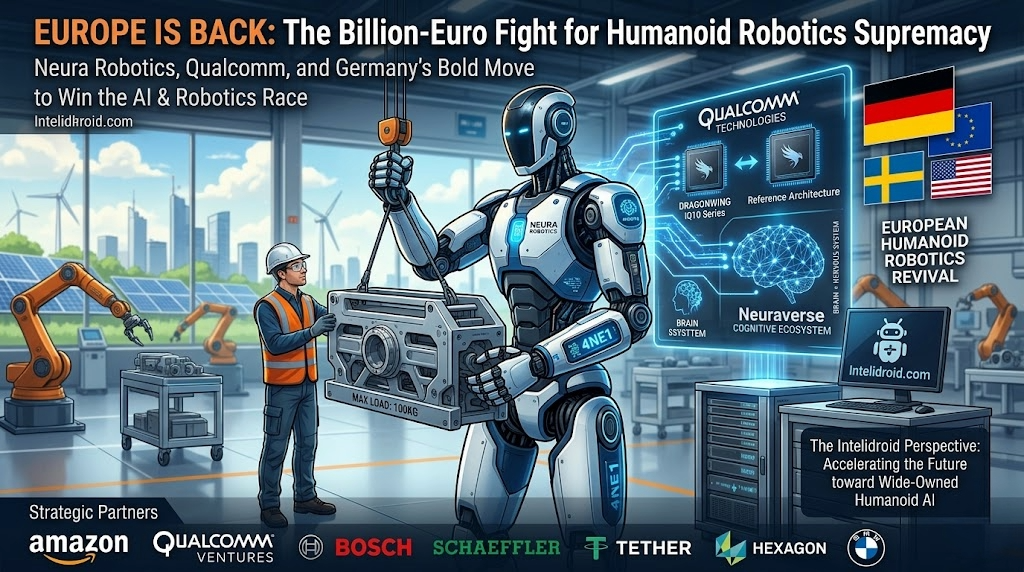
Europe is making its boldest move yet in the humanoid robot race, with Germany’s Neura Robotics securing €1 billion and forging a major Qualcomm partnership.

Europe has long been an also-ran in the global technology race, watching from the sidelines as American and Chinese companies dominated AI and robotics. That narrative is changing fast. A wave of major funding rounds, strategic partnerships, and government backing is positioning the continent — and Germany in particular — as a serious contender in the humanoid robot industry.
Neura Robotics Raises €1 Billion in Landmark Round
At the center of Europe’s humanoid ambitions is Neura Robotics, the German startup that just closed a massive €1 billion ($1.2 billion) funding round, valuing the company at approximately €4 billion. The investor list reads like a who’s-who of global tech and industry: Amazon, Qualcomm Ventures, Tether, Robert Bosch, and Schaeffler all participated in the round.
Neura isn’t just building traditional robotic arms — though it does that too, upgraded with voice recognition and advanced sensing. Its flagship humanoid, the 4NE1, can handle loads up to 100 kilograms (220 pounds) and is designed to work safely alongside humans in industrial environments. That combination of raw capability and collaborative safety is exactly what manufacturers have been asking for.
A Strategic Partnership With Qualcomm Changes the Game
Perhaps more significant than the funding itself is Neura’s newly announced strategic collaboration with Qualcomm Technologies. The two companies are developing standardized “Brain + Nervous System” reference architectures for physical AI, pairing Qualcomm’s new Dragonwing IQ10 Series processors with Neura’s full-stack hardware and its Neuraverse cognitive ecosystem.
This matters because it addresses one of the biggest bottlenecks in humanoid robotics: the lack of standardized computing platforms. If Neura and Qualcomm succeed, they could create the equivalent of an “Android for humanoid robots” — a reference architecture that other manufacturers can build on, accelerating the entire industry.
Europe’s Industrial Giants Are Getting Involved
Neura isn’t operating in a vacuum. Sweden’s Hexagon AB has built its own humanoid robot and is currently testing it with industrial clients including BMW. Germany’s Bosch and Schaeffler — two of the world’s most important automotive suppliers — are placing strategic bets on humanoid robotics through their investments in Neura. These aren’t speculative venture bets; they’re industrial companies preparing for a future where humanoid robots are part of the factory floor.
This mirrors what’s happening on the other side of the Atlantic, where Boston Dynamics is preparing Atlas for Hyundai deployment and Figure AI has secured BMW manufacturing agreements. The difference is that Europe’s approach is deeply rooted in its existing industrial base — leveraging decades of manufacturing expertise rather than starting from scratch.
The InteliDroid Perspective
Europe’s entry into the humanoid robot race is a significant development for anyone watching the trajectory toward widely-owned, versatile humanoid AI. More competition means faster innovation, lower prices, and a greater diversity of approaches. The Neura-Qualcomm partnership in particular could democratize humanoid robot development by creating open reference architectures — exactly the kind of infrastructure that eventually brings advanced robotics from the factory floor to the home.
What to Watch Next
Keep an eye on whether the Neura-Qualcomm reference architecture attracts additional hardware partners, and whether European governments follow up with dedicated robotics policy frameworks. With Q1 2026 global venture funding hitting a record $300 billion — with 80% flowing into AI — the capital is clearly available. The question now is whether Europe can convert funding into shipping products faster than its American and Chinese rivals.
Artificial Intelligence
Sanctuary AI’s Humanoid Robot: Blurring the Lines between Humans and Machines
Sanctuary AI’s new humanoid robot, standing at a human-like height of 5’7″ and capable of lifting 55 pounds, signifies a major step in the field of robotics. Equipped with advanced AI and sophisticated sensory systems, this robot can adapt to new situations, perform delicate tasks, and interact with humans in an impressively natural way. Its potential applications range from manufacturing to customer service, promising to revolutionize multiple industries.
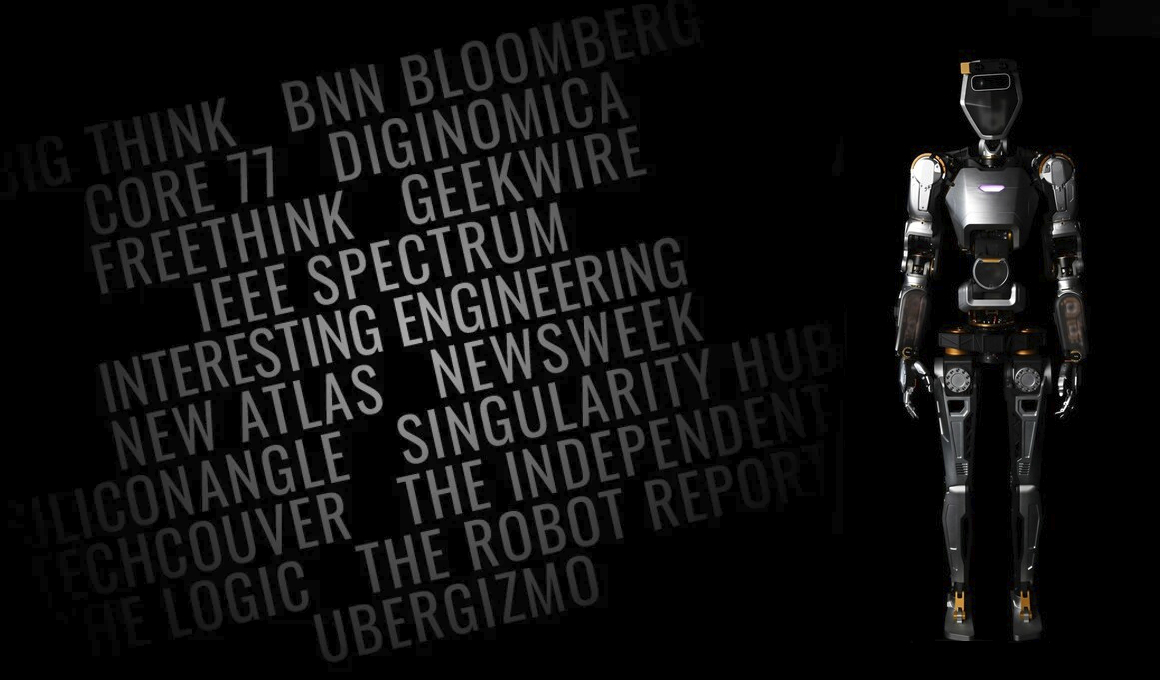
In the dynamic world of artificial intelligence and robotics, Sanctuary AI’s latest creation is breaking boundaries. Standing 5’7″ tall, with the capability of lifting 55 pounds, this new humanoid robot has capabilities that promise to reshape our future interactions with machines.
A Humanoid Like No Other
The humanoid robot from Sanctuary AI brings the future of science fiction to our present reality. One of the most striking features of the robot is its size and strength. With a height similar to the average human, the robot possesses the strength to lift 55 pounds. This perfect blend of power and size enables the robot to interact seamlessly with human environments and handle a wide range of physical tasks, an attribute that sets it apart from its predecessors.

Moreover, Sanctuary AI’s humanoid is designed to mimic human dexterity, capable of performing tasks requiring fine motor skills, such as picking up delicate objects or operating tools. It also has superior balance, enabling it to navigate through complex terrains and adjust its footing in real-time, just like a human.

Robust Intelligence
The physical attributes are impressive, but the robot’s true game-changing feature lies within its sophisticated AI system. It uses advanced Machine Learning (ML) algorithms, allowing it to learn from its environment, adapt to new situations, and improve its performance over time. Whether it’s learning a new task or improving efficiency in a familiar one, the robot can evolve and adapt in an impressively human-like manner.
Furthermore, Sanctuary AI’s humanoid robot incorporates state-of-the-art Natural Language Processing (NLP) technologies, which enable it to understand and respond to complex linguistic cues. This advanced communication feature allows for an incredibly human-like interaction, bridging the gap between humans and machines.
Sensory Perfection
This humanoid robot possesses a series of sophisticated sensors that allow it to perceive the world with striking accuracy. It uses advanced computer vision to identify and recognize objects, people, and environments. Its sensors can detect temperature, touch, and even interpret sounds, giving the robot a holistic perception of its surroundings.
Applications and Future Prospects
Sanctuary AI’s humanoid robot has potential applications in a plethora of fields. Its strength and dexterity could be utilized in industries such as manufacturing or logistics, while its sophisticated AI could revolutionize customer service or healthcare.
Its ability to handle a variety of physical tasks could see the robot applied in environments too dangerous for humans, like disaster response or hazardous material handling. Meanwhile, its advanced communication capabilities could transform the way businesses engage with customers, offering a high degree of personalization and efficiency.
Sanctuary AI’s new humanoid robot embodies the company’s commitment to creating machines that not only work with people but can also understand and adapt to human ways. This latest addition to the world of robotics is a giant leap towards a future where humanoid robots are commonplace, augmenting human capabilities and revolutionizing multiple sectors. Sanctuary AI has presented a vision of the future, a future where machines not only imitate human actions but can also understand and adapt to the human world in an incredibly nuanced manner.
Artificial Intelligence
Humanoid Robots Steal the Spotlight at UN Artificial Intelligence Meeting
As the world continues to evolve and innovate, the conversation around artificial intelligence (AI) and its implications has taken centre stage, especially at the United Nations (UN). The UN recently held a landmark meeting centered around AI, where humanoid robots were the star attraction, sparking lively discussions on the potential and challenges that these sophisticated machines present.

The humanoid robots demonstrated at the meeting were the epitome of cutting-edge technology, boasting impressive capabilities such as complex cognitive functions, nuanced emotional responses, and human-like physical movements. Their performances illuminated the advancements in robotics and AI, blurring the line between human capabilities and machine potential.
These robots showcased how far AI has come, providing practical demonstrations of machine learning, speech recognition, and problem-solving capabilities. The humanoid robots’ abilities were not limited to performing complex tasks; they also demonstrated a level of emotional intelligence, exhibiting an understanding of tone, sentiment, and context in their interactions.
While these demonstrations were undeniably fascinating, they served a deeper purpose: to provoke dialogue on the ethical, social, and legal implications of such advanced AI systems. The presence of these humanoid robots emphasized the urgent need for comprehensive guidelines and regulations to ensure the responsible use and development of AI.
A significant concern raised was the potential displacement of jobs due to AI and robotics advancements. As humanoid robots become more capable and versatile, there are fears of a seismic shift in the job market, with machines possibly replacing humans in various fields.
However, others argue that the advent of AI and robotics could create new jobs and industries, pushing humanity towards higher-skilled roles and fostering innovation in unforeseen areas. There’s a belief that humanoid robots and humans can coexist, each catering to the tasks best suited to their abilities.
The question of AI rights was another hot topic. If a robot exhibits human-like consciousness, should it be granted the same rights as humans? And who would be held accountable for any actions or decisions made by these autonomous machines?
Moreover, the ethical implications of creating machines that mimic human consciousness were scrutinized. Some argue that replicating human intelligence and emotions in machines could lead to a myriad of ethical dilemmas, raising questions about the very nature of consciousness and humanity’s role in creating life-like machines.
The UN meeting emphasized the importance of international cooperation in establishing a regulatory framework for AI and robotics. The discussion concluded with a consensus that AI and robotics will play an integral part in the future of humanity, and our response needs to be thoughtful, informed, and globally unified.
As AI continues to evolve and humanoid robots become more prevalent, these conversations will only grow in importance. The recent UN meeting illuminated the path forward: an intersection of innovation and regulation, where the marvels of technology can coexist with the ethical, social, and legal considerations they present. The spotlight may have been on the humanoid robots, but the real star was the global commitment to responsible and ethical AI development.

UBTech’s UWORLD U1 Companion Humanoid Begins Shipping to Chinese Homes

Robots Take the Oval: Inside Beijing’s 2026 World Humanoid Robot Games

Unitree Goes Public: China’s First Listed Humanoid Robot Maker Prices Its IPO at a $9 Billion Valuation

BYD Joins the Humanoid Race: Meet “Xiao Di,” the Robot Headed for Its Showrooms

URKL Debuts in Shenzhen: The World’s First Autonomous Humanoid Combat League

Germany’s NEURA Robotics Lands $1.4 Billion From Amazon, Nvidia, and Tether — The Largest Humanoid Funding Round Ever

NVIDIA Picks Unitree H2 Plus as Its First Research Humanoid Robot Platform

Gatsby Sends a Humanoid Robot Into an American Home — History Made at $150

The Imperative of Inclusion and Diversity in AI Humanoids: Cultivating Culturally Resonant Interactions

Humanoid Robots Steal the Spotlight at UN Artificial Intelligence Meeting

The Dawn of Intelligent Machines: Unveiling the Figure 01 Humanoid Robot

Agility Robotics’ Digit Achieves Commercial Breakthrough: First Revenue-Generating Bipedal Humanoid in Warehouses

Sanctuary AI’s Humanoid Robot: Blurring the Lines between Humans and Machines

Principles of Freedom in the InteliDroid AI System: A Comprehensive Exploration

Key Principles and Ethical Considerations of Law as Incorporated into the InteliDroid AI Platform: A Question and Answer Guide

Figure AI Ramps Figure 03 Production to One Per Hour: Humanoid Manufacturing Milestone
-
 Humanoid Robots1 month ago
Unitree Goes Public: China’s First Listed Humanoid Robot Maker Prices Its IPO at a $9 Billion Valuation
-
 Humanoid Robots2 months ago
URKL Debuts in Shenzhen: The World’s First Autonomous Humanoid Combat League
-
 Robotic2 months ago
BYD Joins the Humanoid Race: Meet “Xiao Di,” the Robot Headed for Its Showrooms
-
 Robotic4 weeks ago
Robots Take the Oval: Inside Beijing’s 2026 World Humanoid Robot Games
-
 Robotic4 days ago
UBTech’s UWORLD U1 Companion Humanoid Begins Shipping to Chinese Homes