
Humanoid Robots
1X NEO Preorders Open: The Consumer Era of Humanoid Service Droids Begins
1X Technologies opens preorders for NEO humanoid robot, targeting US homes in 2026. A leap for consumer service droids, embodied AI, and InteliDroid’s platform in AI robotics.

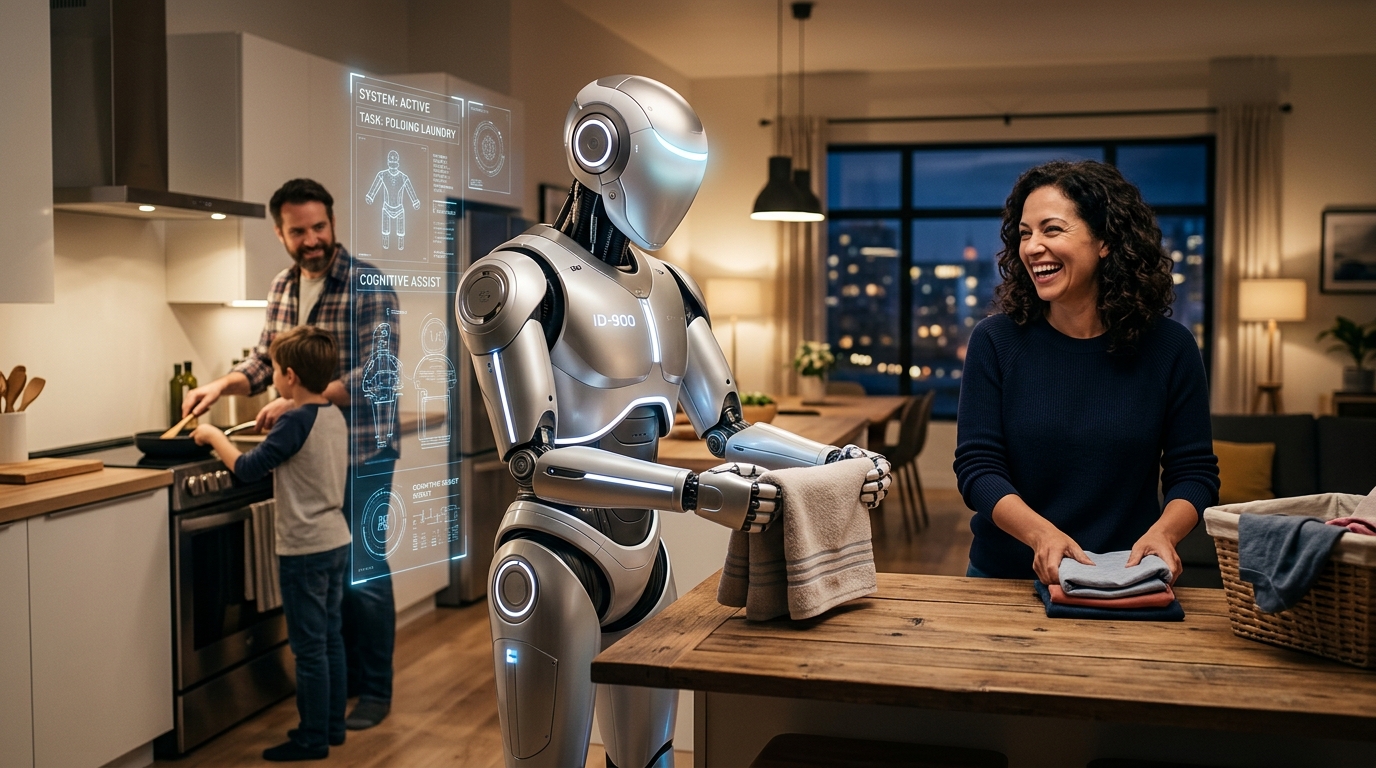
For years, humanoid robots have been the stuff of trade show demos and carefully choreographed YouTube videos. Now, 1X Technologies wants to put one in your kitchen. The Norwegian robotics company has officially opened preorders for NEO, its consumer-facing humanoid robot — and with it, has taken what may be the most ambitious step yet toward making household robots a real market rather than a distant promise.
Meet NEO
NEO is a human-scale, soft-bodied robot built for the physical demands of domestic life. It can lift up to 150 pounds and carry 55, and it moves through home environments with what 1X describes as human-like grace. The design reflects a deliberate philosophy: a robot that shares your space needs to be safe to be around, not just capable. Where many industrial robots are built for raw performance in controlled environments, NEO is engineered for the messy, unpredictable reality of a household. Control is handled through voice commands or a companion app, and the underlying intelligence is powered by what 1X calls “Redwood AI” — a system built on a “World Model” trained on millions of hours of human action video.
Two Ways to Bring NEO Home
Securing a spot in line costs just $200, and 1X says that deposit is fully refundable. From there, buyers choose between two acquisition paths:
- Outright Purchase: $20,000 for full ownership, including a three-year warranty and priority delivery.
- Subscription Model: $499 per month with a minimum six-month commitment, a plan that includes hardware upgrades as the technology iterates.
The subscription option is a clever hedge for early adopters who want to stay current without being locked into hardware that could be superseded within a year. It also lowers the barrier to entry in a meaningful way — spreading the cost over time while keeping buyers connected to the platform as it improves.
What It Can Actually Do
In practical terms, NEO is designed to tackle the domestic chores that consume hours of the average week: folding laundry, tidying rooms, watering plants — the sort of repetitive, low-glamour tasks that are genuinely time-consuming but don’t require human judgment at every step. The soft-bodied design and tendon-driven hands give it the dexterity to handle delicate objects, and the AI backbone means it learns from observation rather than rigid pre-programming.
1X’s emphasis on collaborative safety addresses one of the biggest psychological barriers to home robotics: the unease of sharing close quarters with a machine. NEO is built to work alongside people, not around them.
The “Expert Mode” Hybrid: Honest About What It Can’t Do Yet
Here’s where 1X deserves credit for unusual candor: NEO is not fully autonomous at launch. The company estimates it can independently handle 60 to 70 percent of tasks. For situations it can’t navigate on its own — an unfamiliar object, an unexpected spill, a task outside its trained repertoire — the robot falls back on what 1X calls Expert Mode.
In Expert Mode, a vetted 1X operator takes over remotely, piloting NEO via a VR headset to complete the task. This isn’t just a customer service band-aid; each remote session doubles as a training run. The human expert’s movements feed directly back into the AI, helping NEO learn to handle the same situation autonomously the next time around. It’s a smart feedback loop: the robot ships before it’s perfect, and customer use actively makes it better. The hybrid model also echoes a broader pattern emerging across the industry — the pragmatic recognition that full autonomy is a destination, not a launch requirement.
When to Expect It
First deliveries to U.S. customers are targeted for late 2026, with an international rollout planned for 2027. Those timelines carry the usual caveats that come with ambitious hardware — supply chain surprises, software delays, the ever-present complexity of scaling a novel product — but 1X has been methodically building toward this moment for years, with a track record of iterating in the real world rather than the lab.
A Milestone Worth Paying Attention To
The humanoid robotics space has seen genuine industrial traction in recent years: Figure’s robots are deployed at Amazon, Agility’s Digit has generated warehouse revenue, and factories in China are gearing up for production runs of tens of thousands of units annually. But consumer deployment is a fundamentally different problem. The home is harder than the factory — it’s unstructured, full of fragile objects and unpredictable occupants, and the expectations are personal in a way that warehouse performance metrics simply aren’t.
1X is betting that the combination of embodied AI, a pragmatic hybrid autonomy model, and a flexible ownership structure is enough to crack that problem. At $20,000 — or $499 a month — NEO isn’t cheap. But for a fully functional humanoid robot delivered to your door, it may be the closest thing to accessible the industry has ever offered. If 1X delivers on its timeline, the preorder queue opening today could mark the moment the consumer humanoid era stopped being science fiction and started being something you could actually order.
Humanoid Robots
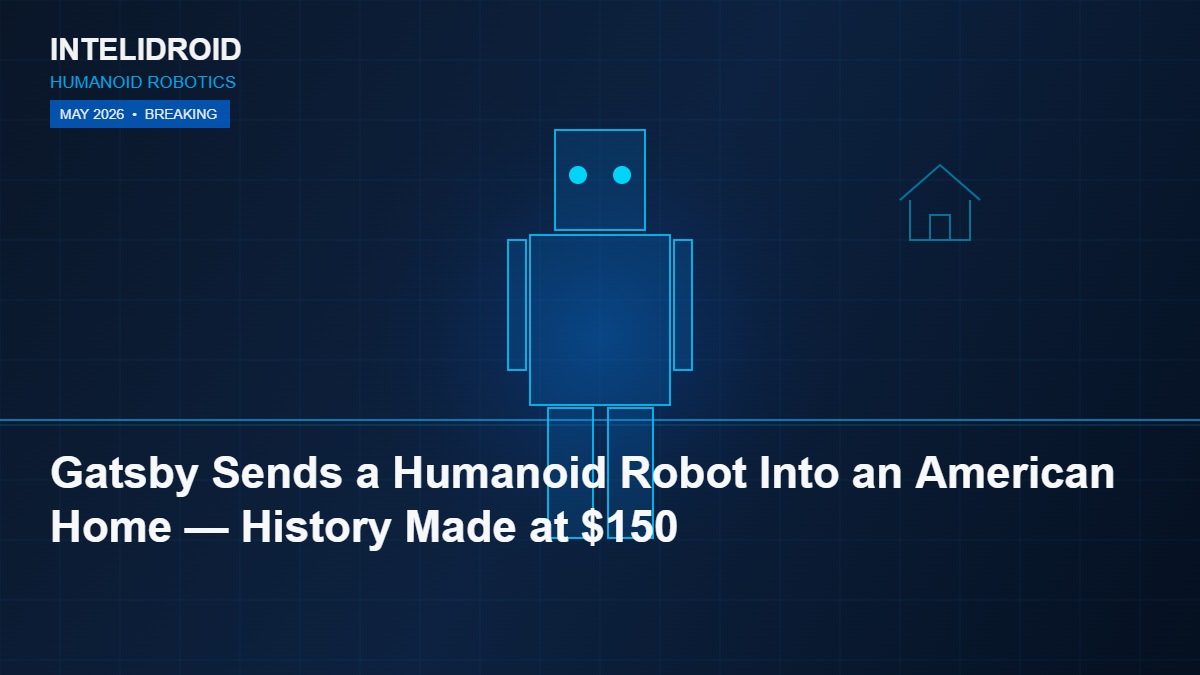
Gatsby Sends a Humanoid Robot Into an American Home — History Made at $150
San Francisco startup Gatsby made U.S. history on May 14, 2026, dispatching a humanoid robot to complete the first-ever paid residential cleaning for an American consumer — at a flat rate of $150 per clean.
A San Francisco startup just quietly rewrote history. On May 14, 2026, a humanoid robot entered a customer’s apartment, cleaned it from top to bottom, and walked back out — the first time a humanoid machine has ever performed a paid residential cleaning for an end consumer in the United States.
The company behind the milestone is Gatsby, founded in January 2026. Most people hadn’t heard of it. That changes now.
The Moment Happened Quietly — But It Changes Everything
Gatsby selected its first customer entirely at random from a waitlist of eager San Francisco residents. The customer booked through the Gatsby iOS app like any ride-share or food delivery order. The humanoid robot arrived, navigated the apartment autonomously, cleaned it, and left. No human supervisor on-site. No controlled media environment. Just a machine doing housework in a stranger’s home.
This wasn’t a demo for investors. It wasn’t a proof-of-concept with a pre-vetted partner. It was a real commercial transaction — the first of its kind in American history.
Gatsby founder and CEO Aron Frishberg, who left the University of Chicago to build the company under parent firm West Egg Labs, was direct about what’s at stake: “Housework is the largest unpaid job in human history, and it falls hardest on the people with the least time to give. We’ve mapped every neuron and synapse in a fruit fly’s brain, yet we still clean our homes the same way our ancestors did hundreds of years ago.”
$150 to Have a Robot Clean Your Apartment
Gatsby charges a flat rate of $150 per cleaning, regardless of apartment size. Professional human cleaning services in San Francisco typically run between $150 and $300 per visit. On price alone, the robot is immediately competitive.
The service is currently live only in the San Francisco Bay Area, but the waitlist has expanded well beyond the city. Gatsby has signaled plans to scale nationally as operations mature.
For context: consumers have been willing to pay $30 for a 20-minute Uber ride and $15 for grocery delivery. A $150 apartment cleaning — with no scheduling headaches, no background check anxiety, and guaranteed consistency — sits in a price range that millions of households already spend on cleaning services. The robot just removes the human friction entirely.
Gatsby Isn’t Building a Robot — It’s Building the Platform
Here’s what makes Gatsby’s approach strategically distinctive: the company is hardware-agnostic. It does not manufacture its own humanoid robot. Instead, it is building the consumer distribution layer — the software stack, home navigation systems, booking interface, and operational infrastructure required to deploy any humanoid robot into a real residential environment.
Think Uber, not General Motors. Think Airbnb, not Marriott.
While Tesla Optimus, Figure AI, 1X Technologies, and others are spending billions racing to build the ideal mechanical body, Gatsby is betting that the distribution layer — the interface between robots and real consumers — is where the lasting value accumulates. If a cheaper, more capable robot ships next quarter, Gatsby can integrate it and immediately upgrade its service fleet without rebuilding its business model from scratch.
The company is backed by NVIDIA Inception and Entrepreneurs First, two organizations with strong track records of identifying foundational infrastructure plays in emerging tech categories.
Why Cleaning First — and Why It Matters
Cleaning was selected as Gatsby’s launch market with deliberate logic. It is a service that is universally disliked, already commands substantial consumer spending, involves highly repetitive and learnable tasks, and — crucially — has seen almost zero technological disruption since the Roomba introduced robotic vacuuming in 2002.
The humanoid form factor changes the equation. Unlike wheeled robots confined to flat floors, a humanoid can climb stairs, open doors, move objects between rooms, and operate standard household appliances without requiring any modification to the home environment. For the first time, whole-home autonomous cleaning is technically feasible at scale.
Gatsby is explicit that cleaning is a starting point, not a destination. The underlying platform is designed to extend across any domestic service category where a human worker currently enters the home — from laundry and errands to elderly care assistance and package handling.
The Bigger Picture for Humanoid Robotics
For years, the humanoid robotics industry has been defined by warehouse deployments, factory floor integrations, and carefully staged demos. Gatsby’s May 14 milestone represents something qualitatively different: a humanoid robot operating inside the messy, unstructured environment of a real consumer home, completing a task that a paying customer booked through a smartphone app.
This is the consumer era of humanoid robotics beginning in earnest. As hardware costs fall and robot capabilities improve, Gatsby’s platform model positions the company to benefit from every advance made by the underlying hardware manufacturers — regardless of which platform ultimately wins the robot wars.
Mark the date. The robots aren’t just sorting packages in warehouses anymore. They’re cleaning our homes. And if Gatsby’s early trajectory holds, the $150 cleaning will look like a historical footnote in a few years — the moment the robotic home services economy quietly switched on.
Humanoid Robots
Meta Acquires Assured Robot Intelligence: Physical AI Accelerates Into Homes and Factories
Meta acquires ARI to power Metabot humanoid AI, amid big tech push into embodied AI, agentic AI, humanoid manufacturing scale-up by Boston Dynamics and Apptronik, and privacy governance imperatives for local AI infrastructure.
Meta Acquires Assured Robot Intelligence: Physical AI Accelerates Into Homes and Factories
Meta Platforms has acquired Assured Robot Intelligence (ARI), a specialist in humanoid robotics AI, to power its “Metabot” project focused on precise manipulation tasks. This move positions Meta directly in the race for embodied AI leadership, joining Google, Microsoft, Amazon, and specialized firms like Figure AI and Boston Dynamics in building physical intelligence for real-world deployment.
Big Tech Enters the Physical Realm
The acquisition reflects a broader convergence: software giants recognizing that digital AI alone cannot solve physical world problems. ARI’s expertise in robot perception and control will accelerate Meta’s Metabot, designed for dexterous tasks requiring fine motor skills and environmental understanding. This aligns with industry momentum—Google integrating Intrinsic for Gemini Robotics-ER models targeting factory deployment by 2028, Microsoft backing Figure AI’s $39 billion valuation, and Amazon acquiring Fauna Robotics.
What does this mean for local AI infrastructure? As humanoids proliferate, on-device processing becomes essential for low-latency perception and execution, reducing reliance on cloud APIs while enabling auditability of agentic behaviors.
Humanoid Manufacturing Hits Escape Velocity
Boston Dynamics’ electric Atlas enters commercial production with Hyundai-scale facilities targeting 30,000 units annually by 2028. China’s national strategy drives UBTech’s Walker S2 to 10,000 units yearly. Apptronik’s $350 million raise fuels Apollo mass production. These milestones dissolve supply constraints, shifting focus from “if” to governance of deployed systems.
For homes and small businesses, humanoid readiness demands platforms distinguishing routine local operations from sensitive escalations. Owner-controlled AI ensures routine mapping and task execution stay local, with approval required for external data flows.
Agentic AI Meets Embodied Hardware
ServiceNow’s agentic updates create autonomous workflows, while OpenAI rumors an agent-centric smartphone. MIT’s “Human Operator” wearable demonstrates human-AI symbiosis. Yet vulnerabilities in commercial robots highlight cybersecurity imperatives—humanoids as cyber-physical endpoints require robust governance aligned with NIST and EU standards.
What should stay local versus approved? Behavioral telemetry and third-party integrations demand explicit owner consent, preserving privacy in agentic ecosystems.
Colin Angle’s “Familiars”: Emotional Intelligence for Home Robots
Roomba pioneer Colin Angle launches Familiar Machines, introducing physically embodied AI for natural, emotionally intelligent interaction. This consumer focus complements industrial scale, preparing infrastructures for multi-modal home coordination.
InteliDroid Perspective
Meta’s ARI acquisition underscores physical AI’s convergence on private spaces. InteliDroid’s Humanoid Readiness provides local-first orchestration, coordinating embodied agents through approval-based automation and need-to-know data sharing to maintain owner control over humanoid governance.
Humanoid Robots
Tesla Optimus Gen 3: Mid-2026 Reveal Accelerates Humanoid Readiness
Tesla Optimus Gen 3 mid-2026 unveil and mass production at $20-30K: implications for humanoid robot readiness, local AI servers, and AI privacy in homes and businesses.
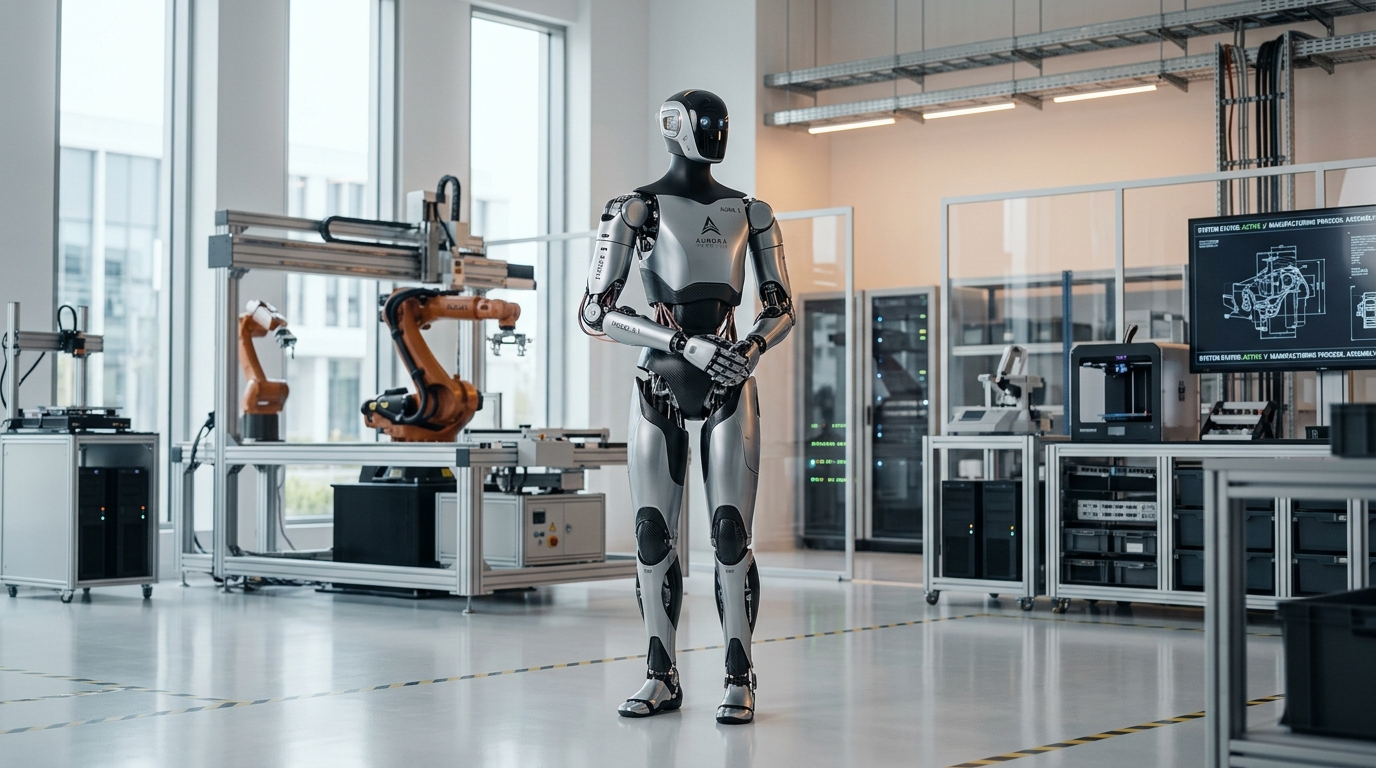
Elon Musk confirmed on May 4, 2026, the timeline for Tesla”s Optimus Gen 3 humanoid robot: a mid-2026 reveal, with mass production commencing late July or August at the Fremont factory. Targeted pricing of $20,000-$30,000 positions it for homes and small businesses, building on prototypes autonomously traversing Tesla offices.
Production Scale Meets Practical Pricing
Fremont”s proven lines enable rapid ramp-up, applying automotive scale to embodied AI. This affordability shifts humanoids from enterprise to SMB accessible, where local infrastructure coordinates robots with smart devices and workflows.
What does this mean for local AI infrastructure? On-device execution for tasks reduces API costs and latency, with approval workflows for external shares preserving privacy.
Agentic Capabilities for Unstructured Environments
Gen 3 advances agentic AI for multi-step planning in homes—organizing, monitoring, assisting—necessitating governance to define local vs approved actions.
Owner-Controlled Deployment
Humanoid readiness demands platforms distinguishing routine local ops from sensitive escalations. Need-to-know data sharing ensures control.
InteliDroid Perspective
Optimus Gen 3”s timeline underscores imminent humanoid integration. InteliDroid”s Humanoid Readiness orchestrates local-first agents with approval-based automation, empowering owners with governance over private AI conductors in their spaces.

Germany’s NEURA Robotics Lands $1.4 Billion From Amazon, Nvidia, and Tether — The Largest Humanoid Funding Round Ever

NVIDIA Picks Unitree H2 Plus as Its First Research Humanoid Robot Platform

Gatsby Sends a Humanoid Robot Into an American Home — History Made at $150

Figure AI’s Helix-02 Humanoids Sort 100,000 Packages in 81 Hours — No Human Required

Ollama Bleeding Llama Vulnerability Deepens Risks for Local AI Infrastructure

Ollama “Bleeding Llama” Vulnerability Exposes Critical Risks for Local AI Infrastructure

Robotera Banks $200M as China’s Humanoid Robot Race Hits Industrial Scale
Meta Acquires Assured Robot Intelligence: Physical AI Accelerates Into Homes and Factories

The Imperative of Inclusion and Diversity in AI Humanoids: Cultivating Culturally Resonant Interactions

Humanoid Robots Steal the Spotlight at UN Artificial Intelligence Meeting

The Dawn of Intelligent Machines: Unveiling the Figure 01 Humanoid Robot

Sanctuary AI’s Humanoid Robot: Blurring the Lines between Humans and Machines

Principles of Freedom in the InteliDroid AI System: A Comprehensive Exploration

Key Principles and Ethical Considerations of Law as Incorporated into the InteliDroid AI Platform: A Question and Answer Guide

Agility Robotics’ Digit Achieves Commercial Breakthrough: First Revenue-Generating Bipedal Humanoid in Warehouses

Figure AI Ramps Figure 03 Production to One Per Hour: Humanoid Manufacturing Milestone
-
 Humanoid Robots2 months ago
Agility Robotics’ Digit Achieves Commercial Breakthrough: First Revenue-Generating Bipedal Humanoid in Warehouses
-
 Humanoid Robots2 months ago
Figure AI Ramps Figure 03 Production to One Per Hour: Humanoid Manufacturing Milestone
-
 Robotic3 months ago
Tesla Optimus Gen 3 Is Almost Here: Silhouette Revealed, Mass Production Set for Summer 2026
-
 Robotic3 months ago
BMW’s AEON Humanoid Robot Goes Live in Leipzig: Europe’s Factory Floor Just Changed Forever
-
 Humanoid Robots2 months ago
China Leads the Charge: Agibot, Unitree, and UBTECH Set Humanoid Shipment Records
-
 Robotic3 months ago
Figure AI’s Helix 02 Gives the Figure 03 Full-Body Autonomy — and It Just Did Your Dishes
-

 Robotic3 months ago
Agibot Hits 10,000 Humanoid Robots: The Production Milestone That Changes Everything
-

 Robotic3 months ago
China’s 2026 Humanoid Robot Half-Marathon: 300 Robots Race Alongside Humans on April 19